October 18, 2026
Ask ten people what a blue moon is and you may get three different answers, all delivered with confidence. One will say it is the second full moon in a calendar month. Another will insist it is the third full moon in a season that has four. A third might recall a photograph of a moon the color of a robin’s egg. None of them is making it up. The trouble is that “blue moon” has never been a single, official astronomical term. It is a calendar convenience, a folk phrase, and occasionally a genuine atmospheric sight. Untangling those meanings is more interesting than the tidy definition usually printed on greeting cards.
Two Calendar Definitions, One Confusing Name
The monthly rule
The moon takes about 29.5 days to travel from one full phase to the next. Most calendar months are 30 or 31 days, so every two or three years a month can contain two full moons. The second is commonly called a blue moon. That is the definition most people meet today: simple, checkable, and easy to put in a headline.
The seasonal rule
Older almanacs used a different system. They divided the year by the solstices and equinoxes into four seasons. Most seasons contain three full moons. When a season contains four, the third full moon is the blue moon. Why the third and not the fourth? The third is the one that throws off the usual naming pattern; calling it blue kept the other full moons in line with traditional names. This seasonal definition is the older one, and many almanacs still prefer it.
How the Monthly Blue Moon Became the Popular One
The shift is a case of a good story outrunning a correction. In 1946, an article in Sky & Telescope described the monthly rule, apparently after misreading the seasonal convention used in the Maine Farmers’ Almanac. The article was not a decree; it was a magazine piece. But the monthly definition was simple, and simplicity travels. A radio segment in 1980 repeated it, and by the time the idea reached newspapers, trivia nights, and later the internet, it had hardened into common knowledge. Astronomers noticed the confusion and wrote corrections, but the monthly meaning had already won the popular vote.
What the Seasonal Rule Actually Means
Seasonal blue moons are rarer than monthly ones, but not by a huge margin. They occur when a season—winter, spring, summer, or autumn as defined by solstices and equinoxes—contains four full moons. The third is the blue moon. This happens because the lunar cycle and the solar year do not divide neatly. The dates depend on your time zone, so two observers in different parts of the world can disagree about whether a given full moon falls in one season or another. That is not a flaw in the moon; it is a flaw in expecting a clean rule from a calendar.
When the Moon Really Turns Blue
None of the calendar definitions has anything to do with color. A monthly or seasonal blue moon is usually pearly white, yellow near the horizon, or dim red during an eclipse. A genuinely blue moon is an atmospheric effect. When the air carries particles slightly larger than the wavelength of red light—ash from a major volcanic eruption, smoke from large forest fires, or certain dust storms—red light is scattered or absorbed more than blue. The moon can take on a blue or greenish-blue tint. The 1883 eruption of Krakatoa is the famous example; smoke from Canadian forest fires produced reports of blue moons in the mid-20th century. These events are unpredictable and usually last only a short time. If you see a blue moon that is actually blue, enjoy it. You are not looking at a calendar; you are looking through the atmosphere.
Folklore, Language, and the Betrayer Moon
The phrase “once in a blue moon” is older than the calendar rules, which is part of why the definitions feel slippery. It means something rare, though earlier uses may have meant something closer to “never” or “absurd.” One popular etymology says “blue moon” comes from an Old English word for “betrayer,” referring to an extra full moon that confused the timing of Lent. It is a good story, but the evidence is thin. Treat it as folklore about folklore, not as settled etymology.
Blue moons also carry a mild superstition in some quarters: a second full moon in a month is said to bring unusual luck, emotional weather, or a chance to restart a project. There is no astronomical reason for any of that. The moon does not know what month it is; people do. Still, the folklore has staying power because it gives us a reason to look up. A blue moon is a useful excuse for a skywatching evening, and that is a real benefit even if the name is a calendar accident.
How to Tell Which Blue Moon You Are Hearing About
When a headline announces a blue moon, ask a few practical questions before you mark the date.
- Is it monthly or seasonal? A monthly blue moon is the second full moon in a calendar month. A seasonal blue moon is the third full moon in a season that contains four. If the story gives a date, check which definition fits.
- Whose time zone? Full moons happen at a precise instant worldwide, but the date depends on local time. A full moon at 00:30 UTC on the first of a month may fall on the last day of the previous month in New York. That can change whether a month has one or two.
- Is it about color? If the article shows a sapphire moon, it is probably discussing atmospheric scattering, not the calendar. Real blue-tinted moons are rare and usually tied to smoke or ash.
- Which almanac? The Maine Farmers’ Almanac and similar publications have used seasonal rules. Other sources use monthly. Neither is wrong; they are different traditions. Check the source’s definition before arguing online.
A Practical Way to Enjoy the Next Blue Moon
Pick a definition and stick to it for the evening. If you want the popular monthly version, open a calendar, find the second full moon in a month, and mark it. If you prefer the older seasonal rule, note the solstices and equinoxes, count the full moons in that season, and see whether there is a third one out of four. Then go outside. A blue moon, by any definition, is just a full moon with a better story. You do not need a telescope; your eyes and a clear horizon are enough. Give yourself ten minutes away from bright streetlights, let your eyes adjust, and look east around sunset or west before sunrise. If the moon is low, it may look larger and warmer in color, which is an optical effect, not a sign. And if someone tells you the moon will be blue, ask which blue they mean. You will either learn something or start a good conversation.
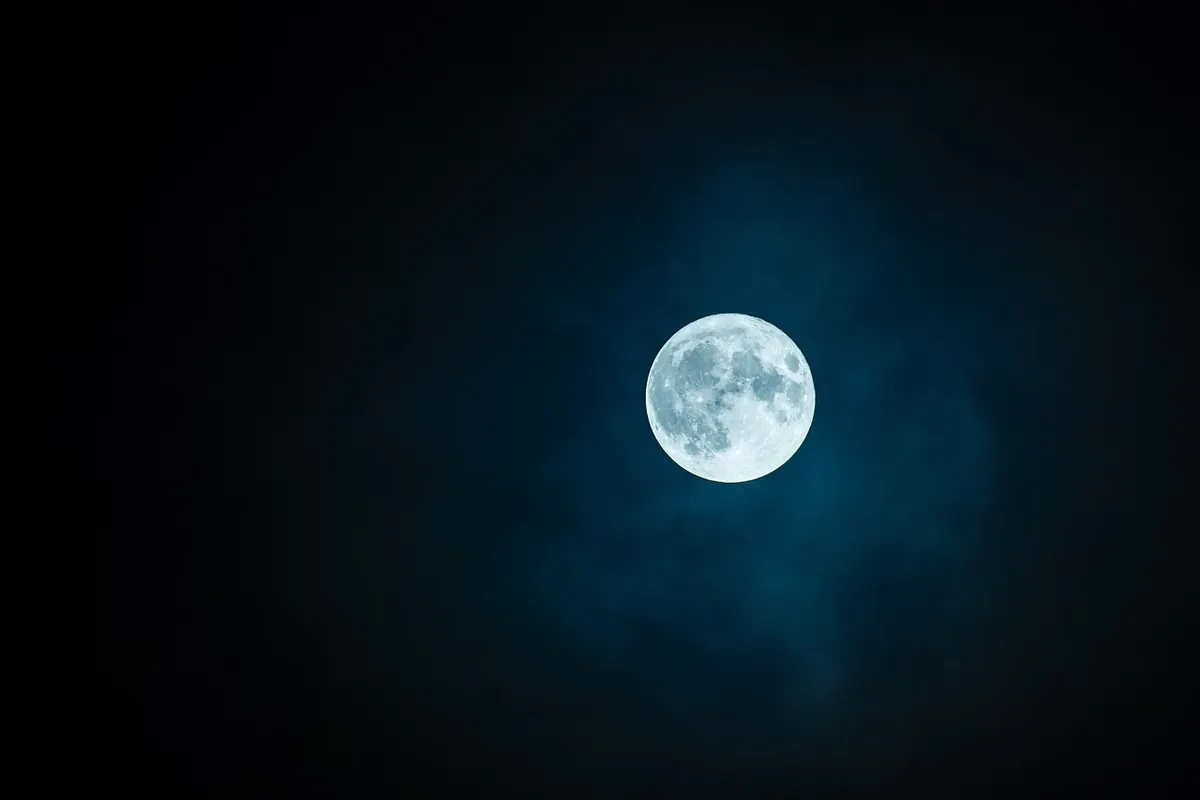
Photo: rkarkowski / Pixabay